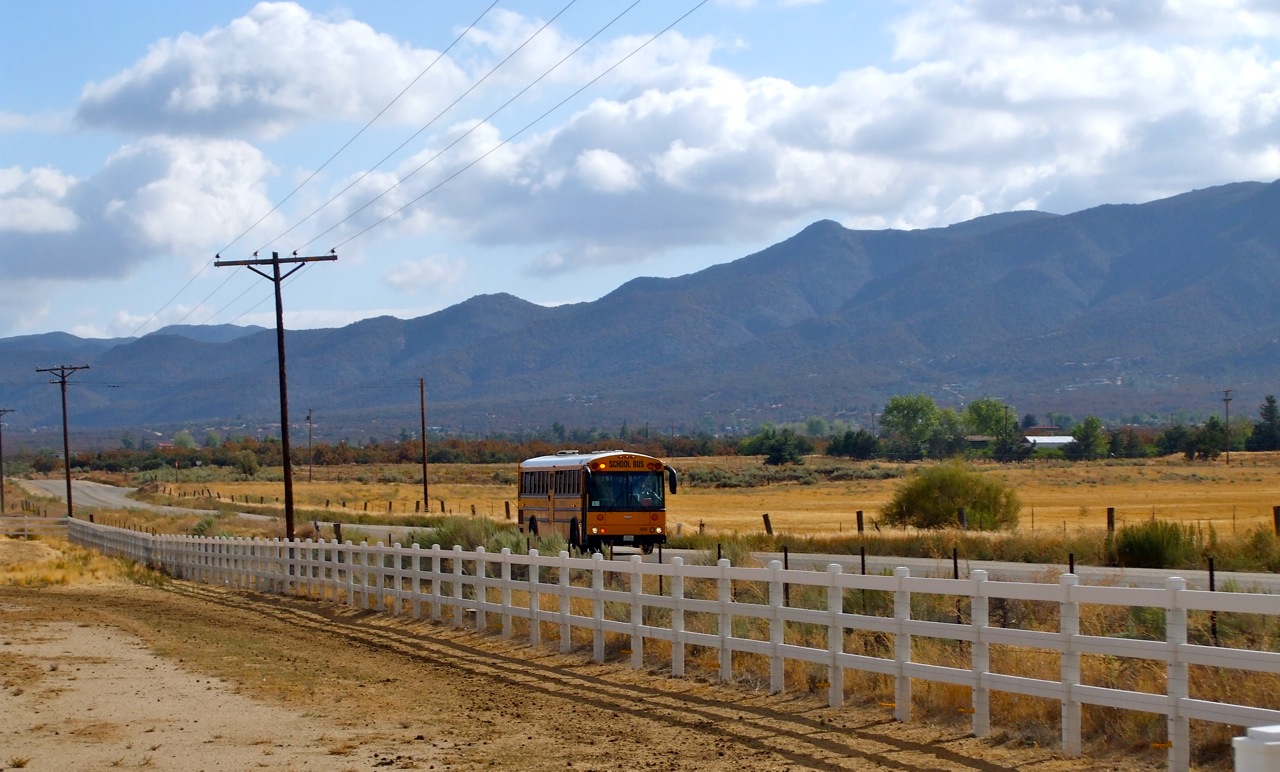
Travels With Charley

Just finished John Steinbeck’s Travels With Charley. About halfway through I started jotting down stuff that struck me as particularly insightful, to share here. I’m sure the first half of the book was equally quotable, but I’m too lazy to go back through it and look for particulars.

Actually, there was one early passage that I did search out:

American cities are like badger holes, ringed with trash — all of them — surrounded by piles of wrecked and rusting automobiles, and almost smothered with rubbish. Everything we use comes in boxes, cartons, bins, the so-called packaging we love so much. The mountains of things we throw away are much greater than the things we use. In this, if in no other way, we can see the wild and reckless exuberance of our production, and waste seems to be the index. Driving along I thought how in France or Italy every item of these throw-out things would have been saved and used for something. This is not said in criticism of one system or the other but I do wonder whether there will come a time when we can no longer afford our wastefulness — chemical wastes in the rivers, metal wastes everywhere, and atomic wastes buried deep in the earth or sunk in the sea. When an Indian village became too deep in its own filth, the inhabitants moved. And we have no place to which to move.”

That was written in 1961. We’ve gotten better at disposing of our waste, but we’re producing more of it than ever before. Makes you wonder where the tipping point will be.

On urban growth and lamenting lost beauty:

This sounds as though I bemoan an older time, which is the preoccupation of the old, or cultivate an opposition to change, which is the currency of the rich and stupid.”

It was that last bit that caught my interest, because somehow I’d missed the connection before. It’s true though: nearly all the people I’ve known who are steadfastly opposed to change — the “same = good, different = bad” philosophy — are people who’d been born into a certain level of wealth and exist in a state of determined stagnation. They cling to whatever cultural circumstance their ancestors accumulated their wealth in, instead of continuing to grow and thrive in a changing world. Most end up with less than they started with, or with nothing at all, because they won’t adapt, and they tend to blame their lost prosperity on the people who are adapting and thriving.

On creativity vs criticism:

In all ages, rich, energetic, and successful nations, when they have carved their place in the world, have felt hunger for art, for culture, even for learning and beauty. The Texas cities shoot upward and outward. The colleges are heavy with gifts and endowments. Theaters and symphony orchestras sprout overnight. In any huge and boisterous surge of energy and enthusiasm there must be errors and miscalculations, even breach of judgment and taste. And there is always the non-productive brotherhood of critics to disparage and to satirize, to view with horror and contempt.”

That passage was one of many that made me wish I’d read this book years ago, because it wasn’t until very recently that I began to realize that the people who are doing all the criticizing are the ones who aren’t creating anything of their own. “The non-productive brotherhood of critics,” what an apt description.

This was my favorite:

When people are engaged in something they are not proud of, they do not welcome witnesses. In fact, they come to believe the witness causes the trouble.”

This is stone cold truth. It’s pretty much the story of my life, but I only came to recognize and understand it in the past couple of years.

I think I’m going to have to reread the rest of Steinbeck’s books. Other than “Travels With Charley” I haven’t read anything of his since high school, and I think I’d enjoy them more now. He seemed like someone I’d love to spend an afternoon conversing with; he saw straight to the truth of things and wasn’t afraid to talk about it. And he seemed like someone who wouldn’t have considered it a waste of his time to spend an afternoon conversing with a stranger .

I think I want to be John Steinbeck when I grow up, but without all the drinking and violence and with more gardening.

Also I think there might be a few more road trips in the future for the kids and me. Their world has been much smaller, so far, than mine was at their age, and I don’t want them to fall into the small-minded thinking habits that little isolated towns tend to encourage. They need to see giant redwoods and the Grand Canyon and immense waterfalls and elegant, timeless architecture: creation on a grand scale. They need to experience the kind of awe and wonder that changes a person forever.

Guess it’s time to update the To Do list. That new mud room might have to wait.

Categories: books, Life, Road trip, Travel | Tags: | 8 Comments

Misty Pomegranate-Colored Musings

Sunday night we got another nice rain, and Monday night we got our first frost of fall. Yesterday most of the pomegranates on my tree had suddenly developed those little splits in their skins that means they need to be harvested soon or they’ll go to waste. So I spent most of yesterday taking pomegranates apart, putting the seeds in containers, and putting the containers in the freezer, which was…about as tedious as it sounds. But also satisfying, because around January and February a handful of half-thawed pomegranate seeds tastes like a fresh little boost of happy.

Still pretty tedious, though. The mind wanders while the hands work, and my mind had lots of time to wander on Tuesday. Some thoughts it offered up for my consideration:

1. I’m amazed at how many people see love as a weakness to be exploited. These people are seriously shortchanging themselves. Love is the most powerful force in the universe, and they will live and die without ever tapping into that vast, amazing power.

2. People have to receive before they can understand the value of giving. People have to be listened to before they can understand the value of listening to others. They have to be accepted and respected, in all their quirky uniqueness, before they can accept and respect others who are different from them. If you convince a child that her feelings don’t matter, she will grow up believing that no one’s feelings matter. Feelings either matter or they don’t. If you’re constantly telling your child not to be so sensitive whenever your thoughtless words and actions wound him, don’t be surprised if he grows up to be insensitive and thoughtless of others. If you try to teach your child humility by treating her as if she has no great value or importance, don’t be surprised if she grows up treating herself (and others) like garbage. This often involves chemical addictions and promiscuity. If you try to impose your will on your child by force, don’t be surprised if he grows up believing that might makes right. If you try to impose your will on your child through lies and manipulation, don’t be surprised if he grows up to be a manipulative liar.

3. A common misconception among Christians is that they are (or should be) somehow exempt from the natural consequences of their own poor choices. This is an unrealistic expectation. You may be “saved by grace,” but you still have to water your garden, tend lovingly to your personal relationships and feed the dog, or they will all wither and die. If you lie and cheat and steal people will stop trusting you. If you are unreliable people will stop investing in you. Being “a Christian” doesn’t absolve you of any earthly repercussions or responsibilities. It’s silly (and totally missing the point) to think it should.

4. One person’s “normal” is another person’s “completely unacceptable.” One person’s “attractive and desirable” is another person’s “eww.” What one person admires and reveres, someone else will feel nothing but contempt for. A way of life that feels like heaven to one person will feel like hell to another. What feels like glorious success to one person will feel like dismal failure to another. I don’t think there are any exceptions to this rule. To borrow Alan Alda’s phrase, “all laws are local.” You have to walk the path God designed you for, and accept that not everyone is going to understand.

So much for the navel-gazing. In other news:

5. I’m currently reading “Travels With Charley” by John Steinbeck. It’s one of the books that came with my house when we bought it twelve years ago and it’s been in my “to read” pile all this time, and I finally got around to it. It is an incredible book, and I highly recommend it if you’re interested in shrewd, amusing and often brilliant observations on human nature and eerily accurate predictions (it was written in 1961) about the impact of technology on American life.

6. I decided to make some of my kids’ Christmas presents this year, to save money. Somehow it didn’t occur to me that this would suck up the last vestiges of my spare time. If my blog goes dark for a while, that’s why. Turns out there is a finite number of minutes per day, and that number is not negotiable. Who knew?

7. A closing quote borrowed from one of my favorite bloggers, wordsmith Scott White of Caveat Emptor:

Once I met a man with a hundred hands. “It must be amazing to be able to get so many things done,” I said. “Alas,” he replied, “if only I had a few more brains and a longer reach, maybe that would be true.” Then I understood the value of people working together.

Categories: books, Christianity, Christmas, Family, frugality, Gardening, Health, kids, Life, Love, Nutrition, Self-Sufficiency, trees, Weather, Winter | 9 Comments

Tuesday Tales: Embattled, Part I

funny pictures of cats with captions
****

Embattled I

“Just stop this thing.”

Categories: Austin After Dark, Gaming, Role-Playing Games, Tuesday Tales, vampires | 5 Comments

Wordless Wednesday: Almost Home

Categories: Family, kids, Life, Wordless Wednesday | 6 Comments

Tuesday Tales: Cavalry Good, Ogre Bad

***

Cavalry Good, Ogre Bad

“I’ll see what I can do.”

Categories: Austin After Dark, Death, Fiction, Gaming, Humor, Role-Playing Games, Tuesday Tales, vampires | Leave a comment

Blog at WordPress.com.