Life

Everything But Money Part V: On Prejudice

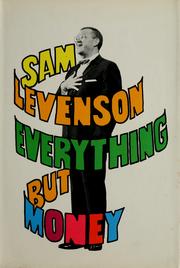
This is an excerpt from “Everything But Money” by Sam Levenson.

Part I

Part II

Part III

Part IV

Quick note: When this book was written, the polite term for a black person was “Negro.” That word has become politically incorrect, even offensive, but in context it’s obvious that the author meant it respectfully. Hopefully it will be accepted here in the spirit in which it was used, and give no offense.

** ** **

The founding fathers said: “All men are endowed by their Creator with certain inalienable rights.”

Christianity says: “The Lord make you to increase and abound in love toward one another and toward all men.”

Judaism says, “What thou thyself hatest, do to no man.”

Confucianism says, “What you do not want done to yourself, do not do unto others.”

Islam says, “Help one another in righteousness and piety.”

How, against this background of lofty principles to which all men pretend to subscribe, do we explain to our children the petty hatreds, slurs, restrictions and humiliations inflicted upon those singled out as “undesirables” by self-appointed “desirables?”

Of all obstacles to a human being’s growth to full stature prejudice is the worst. It destroys more individuals than war. It is hereditary, not in the blood stream, but in the stream of conversation within the home. Out of the mouths of babes come adult slanders, repeated word for word.

How do you go about explaining to your child the meaning of words like spick, dago, wop, sheen, kike, nigger, hunk, polack, shanty, mockie, hebe, chink, coon, greaser? You might refer him to some glossary where he will get nice, sterile definitions with all the pain removed, or you might refer him to a living victim with all the pain still in him.

What a horror it must be for a child to discover that his skin is the wrong color. How can he liberate himself from the despised skin? Of all disadvantages, this, the terrible disadvantage of color, was the one my brothers and I did not have to overcome. A child learns early in life that color hatred is not just skin deep. It goes clear through to the marrow of his self-esteem. Hate my skin, hate me. Often he comes to accept his oppressor’s judgement and ends up hating himself and his group. What an iniquity in a civilized world to burden a newborn child with the hatred of ages.

Society has no right to mislead any child by promising him rewards for good conduct which it will not deliver. If he is treated like the experimental guinea pig in the maze he will behave like the guinea pig. A reward, usually a piece of cheese, is placed at the end of the tricky passageway. The guinea pig will make hundreds of learning attempts until he finally finds the right road to the reward. However, if after he has succeeded in learning the right road, you remove the cheese, even a guinea pig can have a nervous breakdown or become violent. The child who makes every effort to learn the “right way,” who strains to achieve the reward only to find it cynically withdrawn at the last moment, will break down. If we offer a reward for virtue we must offer it without consideration of skin color, language or religion, or we will reap the reward of violence.

This aberration called prejudice is an ancient malady and no one is completely immune to it. Even those most often victimized by prejudice may nurture prejudices of their own, perpetuating the vicious cycle of unreasoning, sick hate: white against black, black against white, nation against nation, neighborhood against neighborhood, man against man.

…The violated minority can appeal for justice but the final solution of the problem will have to come from the oppressor. Basically, anti-Semitism is a Christian problem. The Negro problem must finally be solved by the white man. After all, who done it?

Shedding a prejudice is an agonizing experience. An illogical hatred nourished for hundreds of years for whatever reason — religious, economic, or political — finally becomes a mass mental disease. The white people of this country are predominately favorable to the Negro’s demands for equality, yet many cannot shed their prejudice. When they say “The Negro is not ready yet,” what they mean is “I am not ready yet.”

It will take longer to unravel the knots of hatred in the white man than it will to achieve equality for the Negro. I have heard white men of good will say, “I don’t want to hate him. I hate myself for hating him. I don’t know why I hate him.” One woman’s deep-rooted fear of the Negro came to this: “Who is she to hate me? I am somebody. When she becomes somebody I will be nobody. If she moves next door we all become nobody. We can’t all be somebody.”

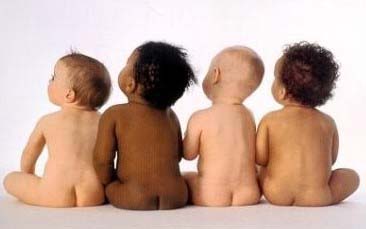
I am concerned here primarily with the effect of prejudice on the chances of the newborn babe delivering his message to the world. What are the odds for a kid born with the unpopular skin of the century? How can we afford the possible loss of this child’s talents, one of which may lead to a cure for cancer, or perhaps even a cure for the greatest killer of them all — prejudice? What might happen to the world if for one generation we did not teach our children to hate?
Categories: books, kids, Life | Tags: , , | Leave a comment

Everything But Money Part IV: On The Value Of Trade Skills

This is an excerpt from “Everything But Money” by Sam Levenson.

Part I

Part II

Part III

** ** **

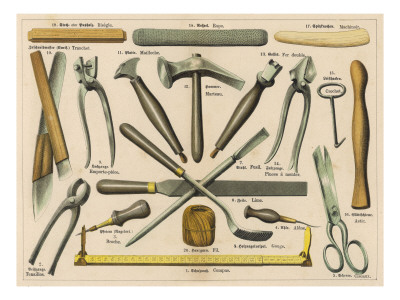
There are many kinds of intelligence. At the moment, academic intelligence is being honored far above vocational intelligence. Only when the teachers and parents will come to truly believe it will the child also believe that his talent, whatever it is, is good, that he will be respected for his labors, that a job well done in any field of human endeavor is truly an achievement, whether it is cerebral or manual. Tribute is long overdue the future tillers, toilers, makers and menders who will keep our physical environment from falling apart at the seams.

We owe an apology to the nonacademically-minded young man who is not college bound. How often do the newspapers print the pictures of vocational school graduates who have made the most of their mechanical gifts? In June of each year long columns appear in the newspapers listing the names of the Westinghouse, Merit, and other scholarship winners. Rarely are the achievements of the vocational school youngsters similarly publicized. Why no fanfare for the future plumbers, painters, bakers, mechanics? We are not fooling the kids. Is the mechanic, by implication, a less important human being than the scientist? We keep on asking, “Who is going to do the plumbing?” Certainly not any young man whose honest labor is not respected as much as that of the scientist.

The members of juvenile gangs come mostly from the ranks of the nonacademically-minded youngsters who resent their exclusion from places of honor reserved for the “smart kids.” In retaliation they create honor rolls of their own, social orders in which they can achieve positions of prestige. The very names of the street gangs indicate their hunger for status: the Dukes, the Kings, the Royal Ambassadors, the Princes, the Lords, the Barons.

** ** **

Debora here: This is something I feel strongly about. There’s been a general exodus in America from manual jobs to corporate “office jobs,” which has created its own set of problems. One, there aren’t enough good office jobs to go around, so a lot of young people are finding themselves buried in college debt with no employment prospects to show for it. Two, we’re running short of skilled laborers. Example: here in California the roads are absolute crap. Even freshly-laid asphalt is rough, bumpy and uneven. It’s like no one knows how to properly build a road anymore. We need to woo young Americans back into skilled trades before the infrastructure completely falls apart. Three, the lack of social respect for manual labor has led to an appalling decline in pay scales and benefits. People like to say, “We hire illegal immigrants to do the job that Americans won’t do,” but that’s not true at all. Most young Americans would be happy to take a manual labor job if it payed a living wage, offered reasonable benefits and didn’t treat its employees like disposable trash. Four, all these sedentary office jobs are wreaking holy hell on our collective health. As a nation we are overweight, under-exercised, depressed and discontent. Most of those miserable cubicle slaves would be astonished to learn how much happier they’d feel after a day of satisfying physical work that fits their particular talents. But they’ve been told that that kind of work is beneath them, and they believe it. And don’t even get me started on all the sweatshops in other countries manufacturing virtually every product that Americans use or wear, because it’s cheaper to enslave children and pollute countries with looser industrial regulations than it is to practice domestic environmental responsibility while giving workers safe conditions, fair pay, reasonable benefits and humane treatment.

I…seem to have hijacked Sam Levenson’s post, so I’ll stop here. More tomorrow.

Categories: books, kids, Life, School | Tags: , | 3 Comments

Everything But Money Part III: On Social Development

This is an excerpt from “Everything But Money” by Sam Levenson.

Part I

Part II

** ** **

Once we have done everything to insure the child’s recognition of himself, we have to make clear to him the relationship between his self and the selves of others. The nature of the individual’s involvement with other individuals cannot be taught too early, since this involvement starts with the child’s first breath and does not end until his last.

In a society which believes in education for all, the ultimate objective becomes living with all, even with those you don’t like. Social justice should have nothing to do with personal likes and dislikes. The Scripture says “Thou shalt love thy neighbor as thyself.” It does not say you have to like him, nor does it say “See footnote A regarding color, shape of nose, texture of hair, ethnic classification.”

…We make much of “toughening our youth.” They are tough enough. What they need is softening. Our education is heart-less. It is more important for the child’s first reader to say “Love, Dick, love” than “Jump, Dick, jump.”

…We underestimate the ability of our children to understand mercy, sympathy, and generosity. Just as they can be taught that flowers are pretty and dresses are pretty, they can also be taught that behavior can be beautiful or ugly, sweet or sour, kind or unkind, just or unjust, tender or cruel. Self-expression includes what not to say as well as what to say, and what you say is more important than how well you say it. It is just as vital to approach the world with an open heart as with an open mind. Boys should not be taught that it is unmanly to cry. Men should not be ashamed to weep at injustice. When men will weep at the horrors of current history the world may become better. The world needs a good cry.

…Every lesson should end in a moral and should answer the question, “In what way, directly or indirectly, does this lesson make for better human beings, a better country, a better world?” The acquisition of facts and skills for their own sake is generally accepted as education. Knowledge can be destructive of all that the human race considers sacred. The soul needs education as much as the mind.

…What good does it do a young American to know the subjunctive if he feels no sympathetic pain for a foreign child of his own age who goes to bed hungry every night of his life? The travel posters on the classroom walls never showed such scenes. Who would travel three thousand miles to see a little girl with a twisted spine carrying her sickly little sister on her back? Let no child be called “educated” until he has seen and discussed the ugly pictures and made some moral commitment to the advancement of other human beings beside himself, a commitment not to be his brother’s keeper, but his brother’s brother.

The world has had its fill of educated brutes, “brilliant” men who have led great masses of people back to barbarism. I have seen as much personal cruelty among college professors as amongst illiterates. Personal inhumanity is not unusual in college departments which teach the “Humanities.” I learned this at the tender age of twenty-one when my own college elected me to the Spanish Honor Society, but dissuaded me from applying for a full-time teaching position because the department “policy” at that time was opposed to “inbreeding,” a policy which at that same time did not apply to qualified students of other faiths.

Categories: books, kids, Life, Love, School | Leave a comment

Everything But Money Part II: On Finding One’s Voice

This is an excerpt from “Everything But Money” by Sam Levenson. Read Part I here.

** ** **

I regard overcrowded classrooms as a major menace to individuality. It is possible to educate masses but quite impossible to teach children in masses — especially little ones. I was involved in this futile procedure as a public-school teacher…I have seen the lifeless faces of children whose selves had never been revealed even to themselves, whose unique message will never be delivered. We should hold annual services at the grave of the Unknown Child to remind us of the millions of living children who never really come alive, whose souls remain in limbo in spite of our humanitarian declarations about the sanctity of the individual. Never to discover one’s self is never to be free. The road to personal freedom goes from cognition to self-cognition, to self-recognition, to the supreme joy of recognition by others.

A “class” is an arbitrary grouping of seemingly homogenous beings, no two of which are any more alike than two snowflakes. If it were possible to place children under a microscope, one would find the least of them inspiringly beautiful, distinctively designed. When we gather too many, flakes or children, the loveliness of individuality is lost and what we get is all white, the ultimate in neutrality.

There should be no more than fifteen children in any class. This is now being done for the “special” child. All children are special. They are not created equal. They are created different. There is hardly a child without some gift worth developing, some manifestation of his special being. All gifts are equally important. Each child’s contribution to the human race is to be celebrated with much rejoicing. It is the teacher’s duty to discover the seed of possibility in each child, to talent-scout the souls of little children, to insure to growth and fruition of what is best in this child, whether it is a talent for science, music, art, plumbing or gardening — to nurture his innate ability, to help him toward self-determination through a heightened awareness of his abilities by supplying educational hearing aids to amplify the inner voice for those who cannot hear it by themselves. His voice, once identified, becomes his purpose in life; this will be the voice that will speak his message. In an overcrowded class, as in any class, there is a good chance that only the loud voices will be heard.

In a society which claims to value individuality we have come to place so high a premium upon conformity in children that any deviant from the “norm” is promptly pounced upon as maladjusted. This, too, is a penalty imposed upon the exceptional child because of the large class. The child who feels, talks, thinks and behaves like all the rest is “doing fine.” Like the chameleon, he has learned to camouflage his identity to keep out of trouble. He presents no problem to the teacher. A good teacher should be disturbed when a child accepts everything in his environment, or even worse, becomes a hypocrite, junior grade, and feigns acceptance for fear of being declared an eccentric. The maladjusted child may be the true leader of his group. The fact that nobody follows him does not prove that he is wrong. No child should be declared maladjusted until we have given serious consideration to the possibility that we may be maladjusted, not he. He may be the one who is right, honest, sensitive, profound, and motivated by higher standards than the rest of us. Is it morally right to require adjustment to a society which is maladjusted? It is possible, even in a democracy, that the majority may be wrong. Inability to accept the status quo is not necessarily a sign of weakness. If the founding fathers of this country had all been well-adjusted we would still be a British colony.

…This country abounds in college graduates who have not yet found themselves, bewildered young men and women who wander from campus to campus in search of a “major,” not yet aware of the fact that the real major is one’s self.

Too many people end up earning a living, very often an excellent one, at work they do not love, work that bears little relation to their talents, or at best, does not “interfere” too much with their private lives. The world is full of these unhappy successfuls: doctors who should have been artists, and vice versa; dentists who should have been shoemakers, and vice versa; lawyers who should have been drummers, and vice versa. All are vocational misfits and malcontents who during their schooling were either separated from their talents or never were introduced to them. Ideally, a man should have only one regret about his work — that it ends. He should hate death primarily because it leaves his work unfinished. We are a hobby-happy country because so many men do not find joy in their work. They are split personalities living out lives not truly their own. They will never be at peace with themselves.

Categories: books, kids, Life, School | Leave a comment

Everything But Money, Part I

I’m reading an amazing non-fiction book right now. It’s called “Everything But Money,” by Sam Levenson, and it was first published in 1949. The edition I’m holding is the fourteenth printing, published in 1966, and it contains mentions of events as recent as 1965, so it must have been updated as it was reprinted.

The book is in four parts. In Part 1 the author (who was born in 1911) describes his childhood in the poorest slums of Brooklyn, NY. His parents were Jewish immigrants, I think from Russia or thereabouts, and they had eight kids altogether while barely managing to stave off starvation under conditions of the most abject poverty. Although “abject” might not be the right word: his parents never saw a lack of money as any kind of excuse to fail in life, and they put a great deal of effort into their children’s education and moral guidance. The author grew up in a family that was financially destitute but very rich in love and support. Because of this, he and his seven siblings all overcame the poverty of their childhood and became successful in their adult lives.

In Part 2 the author talks about how different the experience of family life and parenting his own children is in the environment of middle class affluence and national prosperity of the 1950’s and ’60’s. He wonders if in some ways the benefits of “the good life” are actually detrimental to the healthy development of the younger generations. He talks about the ways in which society is failing those generations. By modern (2012) standards, the America he lives in sounds impossibly sane and prosperous, a sad reminder of how far we’ve fallen since those post-WWII glory days. It leaves the reader with the wistful sense that if more people had thought the way he did things might have gotten better instead of worse.

Part 3 is basically a personal monologue describing the author’s own outlook on society in general and parenting in particular. I don’t know what Part 4 is about, because I haven’t gotten there yet. But Part 3 keeps blowing my mind in the best possible way. I’d like to share some excerpts from it here, over the next few days, because I think in these modern times those philosophies and values are more relevant than ever.

So here’s my first offering:

I believe that each newborn child arrives on earth with a message to deliver to mankind. Clenched in his little fist is some particle of yet unrevealed truth, some missing clue, which may solve the enigma of man’s destiny. He has a limited amount of time to fulfill his mission and he will never get a second chance — nor will we. He may be our last hope. He must be treated as top sacred.

In a cosmos in which all things appear to have a meaning, what is his meaning? We who are older and presumably wiser must find the key to unlock the secret he carries within himself. The lock cannot be forced. Our mission is to exercise the kind of loving care which will prompt the child to open his fist and offer up his truth, his individuality, the irreducible atom of his self. We must provide the kind of environment in which the child will joyfully deliver his message through complete self-fulfillment.

When he is born we give him a public name. This provides only tentative identification until he finds his own true name, his potential at birth so completely realized that he and his work and his name become one. To have lived without having “made a name for himself” is virtually to have died at birth. We cannot allow him to be born a VIP and to die anonymously, often ignominiously. We cannot afford the loss of a single soul. We have already lost too many.

** ** **

I’ll post more as I get the chance. Meanwhile, the book is currently out of print but you can read it online here for free.

Categories: books, Family, kids, Life | Leave a comment

Blog at WordPress.com.