Life

10 Books Every Child Should Read (Or Have Read To Them)

We have a “storytime” tradition in our home: every evening before bedtime the kids and I snuggle up together on the sofa and I read to them. When they were younger it was picture books, or anthologies of poetry or nursery rhymes. Now that they’re seven and nine we’ve moved on to chapter books, and I’m really enjoying introducing them to the classics that brought so much joy and inspiration to my own childhood.

This November we read Bambi — the original Felix Salten masterpiece, not the horribly watered-down rewrite by Janet Schulman, or any of those brightly-illustrated Disney versions. I want to emphasize that, because the original unabridged novel is a work of power and truth and beauty that for some reason modern editors and abridgers apparently find unsuitable for modern children. I could not disagree more. Yes, the original book is an unflinchingly realistic view of life in the forest (talking animals notwithstanding); yes, some scary and difficult things happen on its pages; yes, it causes kids to ask questions that require some thought and effort on the part of the parent to answer. Does that mean it’s unsuitable? Hardly. This is much more wholesome fare than most of the stuff published for the 8-to-12 crowd these days. It manages to educate the reader, inspire compassion and contemplation, and be absolutely riveting all at the same time. The abridgments and rewrites have taken everything of value from the tale, leaving it empty of appeal or flavor.

I noticed a similar trend when I was searching for a copy of Johanna Spyri’s “Heidi” a few years back. The original was written in German, and it seems like there’s a different English translation every time a new edition is printed. Some retain the native charm of Spryri’s story, while others seem more concerned with political correctness and watered-down digestibility than with preserving the lessons and values that the original sought to impart. (Although this can be a tricky line to walk: my personal favorite translation is by Louise Brooks, but when I tried to read it to Luke and Elizabeth, ages 6 and 8 at the time, they had a hard time with the rather exotic vocabulary. So I found another translation that used simpler phrasing without sacrificing much of the original flavor, and the kids loved it.)

I’ve been thinking lately about all the books that had such a profound influence on my young self, and wondering if kids these days even know about them. Surely a child who has snuggled up with his mom or dad and had “The Secret Garden” or “Charlotte’s Web” read to him could never grow up to someday open fire on a school or mall with an automatic rifle?

One can hope, anyway. And with that hope in mind, I’ve put together a list of ten books that every child should read, or have read to them. They are all suitable for children ages seven through twelve. Actually, teens and parents might enjoy these timeless treasures just as much as the younger crowd.

Like my list of Christmas read-aloud stories, they are listed in order of age of target audience. In other words, #1 is intended for children closest to the younger end of the scale, #10 is for children closer to the older end.

1. Charlotte’s Web, by E.B. White.

2. The Secret Garden, by Frances Hodgson Burnett.

3. “Heidi,” by Johanna Spyri.

4. Half Magic, by Edward Eager.

5. Bambi, by Felix Salton.

6. The Jungle Books, by Rudyard Kipling.

7. Alice’s Adventures In Wonderland, by Lewis Carroll.

8. Black Beauty, by Anna Sewell.

9. The Little Prince, by Antoine de Saint-Exupery.

10. Smoky The Cow Horse, by Will James.

These stories should be a treasured part of every childhood. Share them with love, remember them forever. :^)

Categories: books, Family, kids, Life | Tags: | 5 Comments

December Watermelons? Who Knew?

I’ve not had a lot of luck growing watermelons in my home garden. The climate’s all wrong for them: at this elevation we get hot, dry days and cool (often cold) dry nights for most of the growing season. Watermelons want moist heat around the clock to really thrive, which is why they tend to grow so well in the deep South.

Still, I do love watermelons, so I keep trying every year. And I have noticed that as my soil gets richer from one summer to the next, the watermelon seeds I plant have begun to at least concede the possibility that they may eventually become productive. I get vines, and sometimes even one or two edible melons.

I should mention that my food garden is fertilized only with horse manure. We have plenty of horses, so there’s no shortage. I’ve had people tell me with great conviction that horse manure is bad for a vegetable garden: it’s too strong, or it’s not strong enough, or it has the wrong nutrients in it, and so on. In response I can only point to the glowing, productive health of my vegetables (not counting the darn watermelons of course), and keep piling on the manure.

It’s true that timing is important when you’re using fresh manure. Where I live the ground doesn’t really freeze solid in the winter, so I do my soil prepping around January or February as the weather permits. First I rake off all the remains of last summer’s crops. Then, because Bermuda grass is the unending bane of my gardening experience, I go through the entire garden and dig out all the evil invading rhizomes that have crept into my soil from the surrounding areas since last spring. I can’t dig them out over the summer without uprooting my crops along with them. Yarg!

Once the garden is thoroughly tilled and weedfree, I bring in the horse manure. I like to spread a good four-to-six-inch-deep layer on top of the broken-up soil. Ideally at this point a nice helpful rain will come along to water it in, but if the weather’s not that accommodating I just turn on the garden sprinkler for a few hours.

A few days later, or whenever the soil is still moist but no longer wet, I till again, digging the manure deep into the ground. Then I let Mother Nature handle the work of composting, which she does admirably: by spring planting time there are literally millions of earthworms going about their business in my soil, and the manure is rotted enough to be safe for seedlings.

The earthworm thing didn’t happen right away. When we first moved to this property the “soil” was really just sand and decomposed granite; nothing grew very well in it other than mustard weed, wild buckwheat and sagebrush. For the first few years I had to buy bags of planting mix from the nursery just to create pockets of soil that veggies could struggle along in. More than once I was tempted to use chemical fertilizers to boost things along (I managed to resist). The horse manure I piled on every winter seemed to vanish without a trace by the following winter. (Actually it still vanishes, but since my garden soil gets blacker and richer every year I assume the manure is playing its part in the great circle of life.)

Then I discovered the magic of mulching with straw, and things started turning around in a big way.

Wow, I’m seriously digressing here, aren’t I? This post was supposed to be about watermelons. I’ll get into mulching and fertilizing more in another post.

So, watermelons. The one crop I can’t seem to succeed with. Occasionally I’ll get a melon or two, but if I don’t pick them THE INSTANT they ripen, they very quickly rot right back into the ground. Even the earthworms seem to be against me here: they’ll wiggle up through a solid layer of straw mulch to nibble happily on the rind of a ripe watermelon.

Then there was this spring: the strangest planting experience I’ve ever had. Half the crops I planted simply declined to sprout. My soil has become so rich now that I normally only have to wave a packet of lettuce seeds at the ground and pretty soon there’s lettuce everywhere, but this year…not so much. I planted my carrot bed twice and got no carrots. Ditto with the cantaloupe seeps and the watermelon seeds. I got a handful of beets, but not nearly as many as I’d planted. Only half the corn I planted grew. My early lettuce crop sprouted, but the later planting didn’t. It was Puzzling, to say the least. It’s like the seeds somehow knew what a horrifically dry year we were going to have, and wanted to save themselves for a better year or something. Even the bell peppers, usually one of my most productive and gratifying crops, did not much of anything this year. It was always to hot or too cold for them — by the time they finally set fruit, Fall was moving in. The tomatoes, potatoes, onions, garlic, herbs and broccoli did well, but even the tomatoes and potatoes didn’t really have a stellar year.

Watermelons. Right. Focus!!

When my watermelon seeds didn’t sprout, I planted more. When those didn’t sprout, I picked up a seedling at the nursery and planted that. It sat there and sulked for a few weeks, then decided to grow. To my pleased surprise, it actually produced some very nice melons, two of which I enjoyed over the summer, and a third that I found all ripe and ready when I returned from my road trip at the end of October.

I saw another watermelon developing when I picked that last one in October, but I pretty much wrote it off. I figured a frost would get it long before it ripened.

So last Sunday I was down in the garden picking an onion for supper. I like to let the onions stay in the ground until they’re needed, since we don’t have a root cellar to store them in. They stay nice and fresh out in the garden.

Anyway, it was snowing Sunday, and all the tender summer crops were dead and blackening and kind of sludging back into the earth the way they do, and sitting there in my watermelon patch amid the dead remains of old vines was a perfectly lovely looking watermelon! It looked as fresh and ripe as a summer day. Apparently the cold weather had sent the earthworms into hibernation before it had ripened enough to appeal to them.

Out of sheer curiousity I picked it and brought it up to the house along with my onion. I wasn’t expecting much, I just wanted to see what the inside of a watermelon looks like in December. I washed it off and sliced into it.

And it was good! Crisp and sweet and juicy and red, in spite of all the hard freezes that had killed off its mother vine. It was like, I don’t know, a pumpkin or a winter squash, impervious to ice. I didn’t know watermelons could do that!

So I’m thinking next summer I’m going to try setting each young watermelon on something that earthworms and soil microorganism can’t chew their way through, like maybe pieces of wood planks, and see if they’re a bit more durable that way. Who knows, I might actually start having some real success producing watermelons!

I hope so, ’cause I do loves me some watermelons.

Now if only we don’t have another bizarro spring like that last one….

Categories: food, Gardening, Life | Tags: | 4 Comments

First Snow!

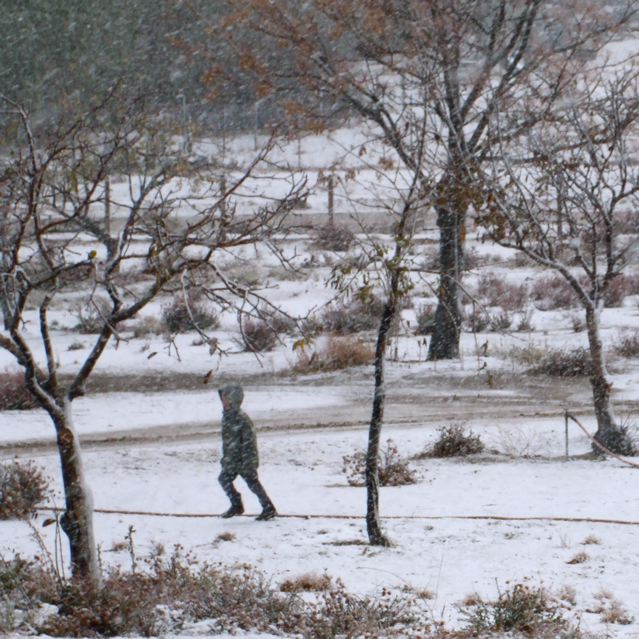
This was the view from our living-room window yesterday morning:window.jpg

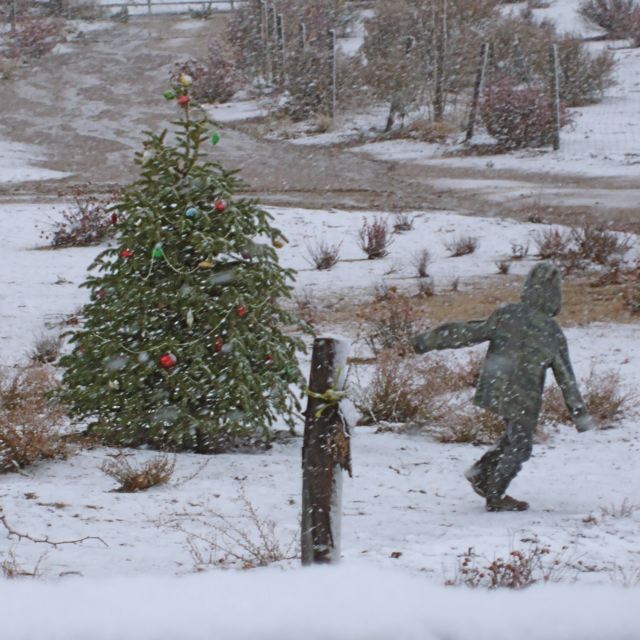
Luke loved it, and spent a good part of the day out frolicking in it…lukesnow1.jpgdecsnow.jpg

…while the rest of us enjoyed it from a distance, through the window, next to a roaring fire.

It’s beginning to look a lot like Christmas….

Categories: Christmas, Family, Life, Winter | 10 Comments

We Got Elfed

See the Silkotch Four dancing as we’ve never danced before!

We’ve Been Elfed!

Categories: Christmas, Family, Humor, kids, Life, Music | Tags: | 2 Comments

Musings On Health, Nutrition And Baking Powder

Ten years ago I was the poster child for poor nutritional habits. I pretty much lived on pizza, donuts, rocky road ice cream and Dr. Pepper. I had no concept of what constituted a balanced diet.

Then I became pregnant with my first child. For the first time I began to wonder if I should maybe be taking a closer look at what was going into my body. After all, I wanted to give this new life inside me its best chance at a healthy, strong beginning.

So I started reading about whole foods and additives and the effects of processing, and pretty soon I’d decided to make some changes in my eating habits. And it didn’t take long for me to discover that the better I ate, the better I felt. One change led naturally to another, and within a few years I felt stronger, more energetic, and just plain healthier than I had since I was a kid. Whole grain breads and cereals, fresh raw produce, organic whenever possible, staying away from artificial flavors, colors and preservatives, no more soft drinks — these things dramatically changed the quality of my life. Not that I’d ever had any serious health problems before, but the new sense of vibrant health was incredible.

One of the smaller changes I made was to stop using regular commercial baking powder. I used to use Clabber Girl, which like most commercial baking powders contains aluminum sulphate as an acidifier. Consuming aluminum has been strongly linked to developing Alzheimer’s disease, and man, I just can’t see taking chances with that.

For a while I was making my own homemade baking powder with baking soda, arrowroot powder and cream of tartar. But the packages of arrowroot powder always passed their expiration dates before I’d used even half, and it seemed like a waste of money (and arrowroot, although to be honest I’m not really sure what that is). But then I found Rumford Baking Powder at my favorite health food store; it’s a “premium, aluminum free” baking powder that uses monocalcium phosphate as an acidifier. Monocalcium phosphate is generally recognized as safe, maybe even good for you depending on who you talk to, and Rumford Baking Powder isn’t that much more expensive than the regular kind, so I started using that instead of making my own.

So this morning I was making waffles for the kids, and I got to reading the fine print on the Rumford label, and discovered that it’s made by the Clabber Girl Corporation. I absorbed that info for a minute, and then wondered, “Why would a company acknowledge the strong connection between an ingredient and a disease, develop and offer a safer version of the product…and then keep on providing the original, probably dangerous version? I mean, why not just offer the safer product as a “new and improved” version of Clabber Girl Baking Powder? It works just as well in recipes. And not everyone shops in health food stores, or knows that consuming aluminum might seriously hink with the quality of their future life. Should there be some ethical responsibility taken here? Seriously, does it ALWAYS have to be about making a few extra bucks by using cheaper ingredients, even at the expense of your customers’ health?

Clearly I was never meant to be a mover and shaker in the world of big business, because these kinds of choices never make any sense to me.

Categories: Family, food, Health, Life, Nutrition | Tags: , | 6 Comments

Blog at WordPress.com.